
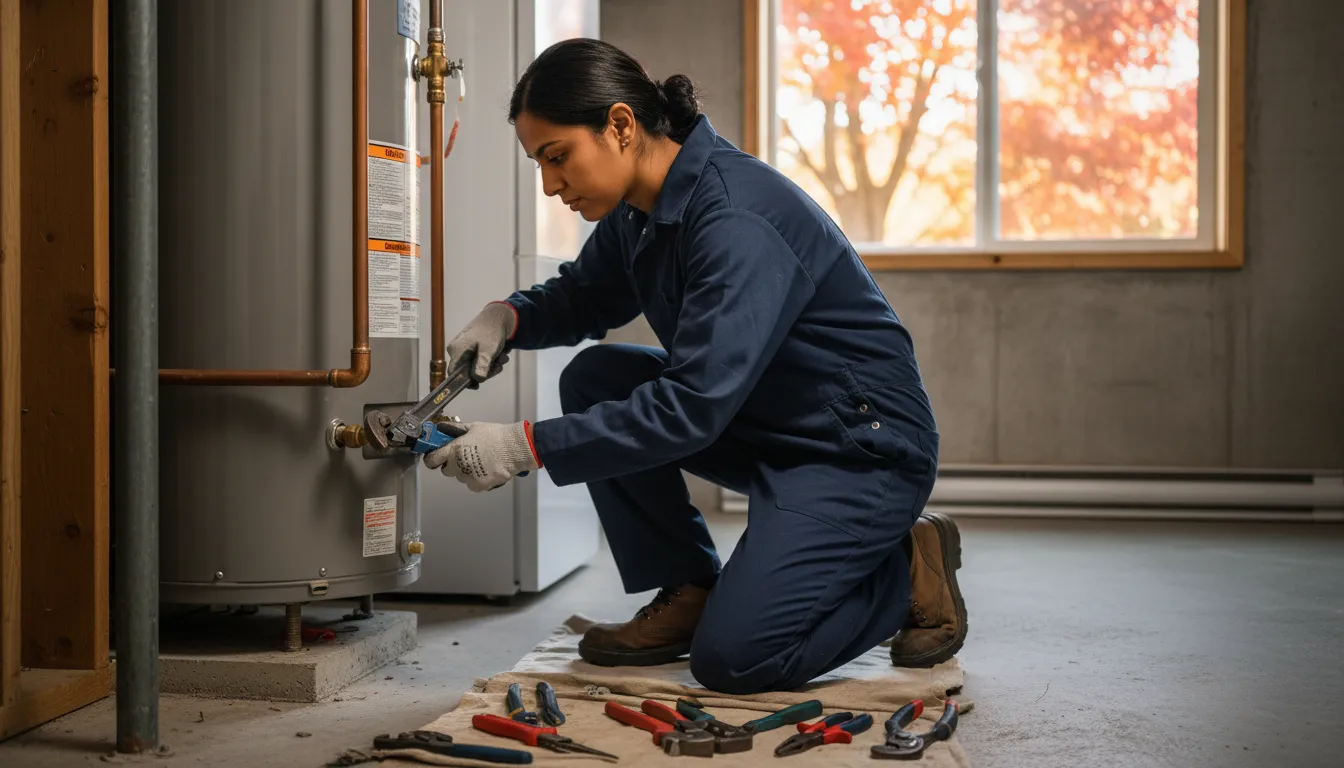
Repiping Planned Around Your Home's Construction, Not a Generic Template
Whether it's a full-system repipe on an older Toronto home or a partial replacement of a failing section, we plan the route before we cut anything.
Email Us for a Free EstimateWhy homeowners choose us
Free estimates · No obligation
Repiping is a system redesign, not a like-for-like swap
A large share of the GTA's housing stock still carries original galvanized steel or early-generation copper supply lines, particularly in neighbourhoods built through the 1950s to 1970s. When these systems reach end of service life, the correct response is rarely a straight pipe-for-pipe replacement — it's a review of the whole distribution layout against current fixture demand and code.
Galvanized steel degradation
Internal corrosion narrows the pipe bore over decades, reducing flow and pressure well before a visible failure occurs.
Material transition points
Where copper, galvanized, and PEX meet in older systems, dielectric and fitting compatibility issues are common failure points we plan around.
Fixture count changes
Additions, finished basements, and renovated bathrooms often add fixture demand the original supply sizing wasn't designed for.
Water quality considerations
GTA municipal water characteristics factor into material choice, since some pipe materials perform better than others under local water chemistry over the long term.
Access and finish impact
We plan routing to minimize how much drywall, flooring, or finished space needs to be opened, particularly in finished basements common in the region.

Aging supply lines fail quietly until they don't
Galvanized pipe in particular corrodes from the inside, so a system can appear functional — if a bit low on pressure — right up until a section perforates or a fitting fails outright. In many GTA homes we've assessed, homeowners had attributed years of low water pressure to the municipal supply, when the actual cause was internal pipe corrosion restricting flow throughout the house.
We assess the whole system before recommending a scope
Before quoting a repipe, we review pipe material, age, fixture count, and any documented pressure or leak history. Some homes genuinely need a full repipe; others only need specific sections replaced. We size and scope the job to what the system actually requires.
How we plan and execute a repipe
The same disciplined sequence applies to full-house repipes and targeted partial replacements.
- 1
System assessment
We review existing pipe material, age, routing, and pressure history throughout the home.
- 2
Route and material planning
New pipe routing and material are selected to match fixture demand and minimize disruption to finished areas.
- 3
Staged shutoff plan
We plan the work in stages so your household retains water service for as much of the project as possible.
- 4
Installation and pressure testing
New lines are installed and pressure-tested section by section before final connections are made.
- 5
Finish coordination
We coordinate access point closures so any drywall or flooring disruption is addressed as part of project close-out.
Why homeowners trust us with a repipe
A repipe touches nearly every part of a home's plumbing system, so planning discipline matters as much as the physical work.
Whole-system review
We assess the full distribution system before recommending scope, not just the section that's currently failing.
Staged for continuity
Work is sequenced to keep water service interruptions as short as possible.
Written scope of work
You receive a clear written plan of what's being replaced and why, before work begins.
Housing-era expertise
We understand the specific supply-line issues common to each era of GTA home construction.
Long-service material selection
Pipe material is chosen for durability under local water conditions, not just upfront cost.
Minimal-disruption routing
We plan routes that limit how much finished space needs to be opened.
Repiping questions
How do I know if my home needs a full repipe or just a partial one?
It depends on the pipe material, age, and where any failures or pressure issues have occurred. We assess the whole system and will recommend a partial repipe if that genuinely addresses the problem, rather than defaulting to a full replacement.
Is galvanized pipe common in GTA homes?
Yes, particularly in homes built before the 1970s across Toronto and older parts of the surrounding regions. Galvanized pipe corrodes internally over time, which is the most common reason we're called in to assess a repipe.
Will I be without water during a repipe?
We stage the work to minimize interruptions, and in most cases your household retains water service overnight and outside active work windows. We'll walk through the specific schedule for your home in the quote.
What pipe material do you recommend?
It depends on the application, local water characteristics, and the section of the system involved. We'll explain the reasoning behind our material recommendation rather than defaulting to one option for every job.
Will repiping affect my walls or floors?
Some access points are usually necessary. We plan routing to minimize this and coordinate finish repairs as part of the overall project scope.
Get your repipe properly assessed and scoped
Send us your home's age and any pressure or leak history, and we'll outline a plan by email.
Email Us for a Free EstimateLocal conditions matter — email us for same-day service.
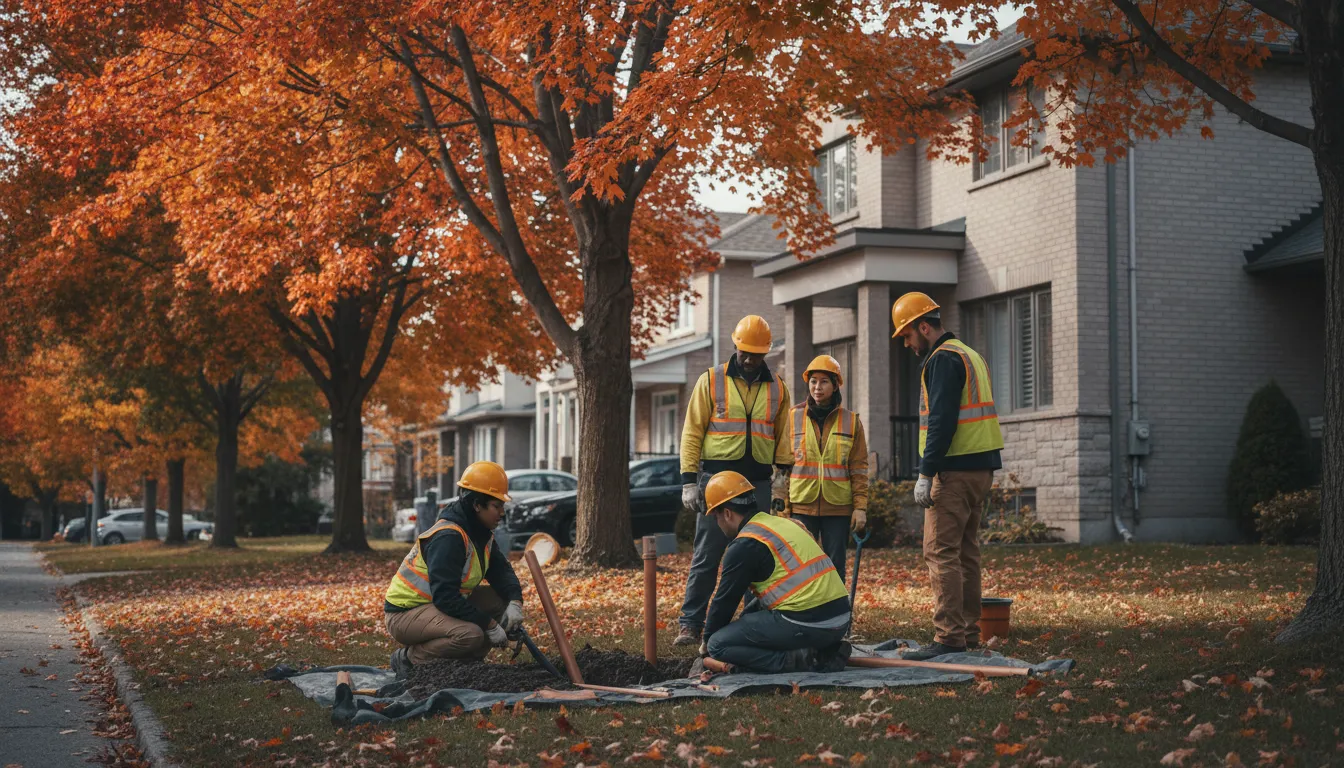
Fall home-service conditions in Ajax, ON
Fall around Ajax, ON is the season to prepare your home before winter sets in.
Proudly Serving Ajax, ON
Local, on-time service throughout Ajax and the surrounding area.